
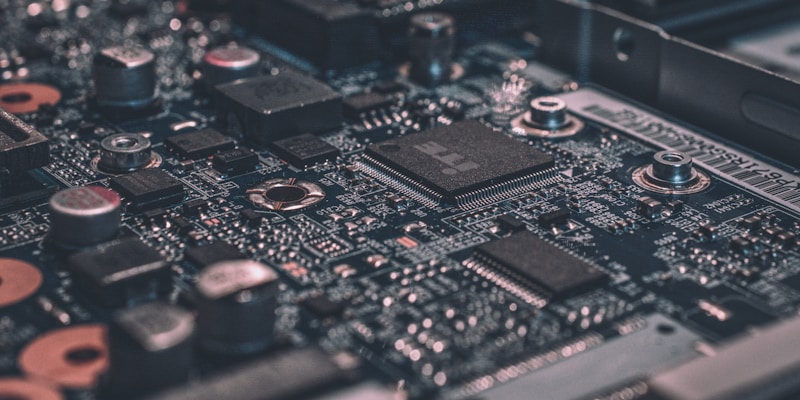
Breakthrough in AI Computing
In a groundbreaking announcement that sent shockwaves through the technology industry, a leading semiconductor manufacturer unveiled its revolutionary quantum-enhanced AI processor on Thursday. The new chip promises to deliver computing performance 100 times faster than current generation AI processors, potentially transforming everything from autonomous vehicles to medical research.
The processor, codenamed "Phoenix," combines traditional silicon-based architecture with quantum computing elements, creating a hybrid system that leverages the strengths of both technologies. This unprecedented approach allows the chip to perform complex AI calculations at speeds previously thought impossible with conventional hardware.
Technical Specifications
Key features of the Phoenix processor:
- Performance: 100x faster than current AI chips
- Power Efficiency: 75% reduction in energy consumption
- Architecture: Hybrid quantum-classical design
- Memory: 1TB of high-bandwidth memory on-chip
- Process: Advanced 2-nanometer manufacturing
- AI Capabilities: Trillion parameter models in real-time
Industry Impact
Industry experts predict the Phoenix chip will accelerate AI development across multiple sectors. Dr. Sarah Mitchell, AI researcher at MIT, called it "the most significant advancement in computing hardware since the invention of the GPU."
Applications Across Industries
Healthcare: The chip's processing power could enable real-time analysis of medical imaging, potentially detecting diseases years earlier than current methods. Drug discovery simulations that currently take months could be completed in days.
Autonomous Vehicles: Self-driving cars equipped with Phoenix processors could process sensor data and make decisions exponentially faster, dramatically improving safety and reliability.
Climate Research: Scientists could run more detailed climate models, providing better predictions and insights into climate change mitigation strategies.
Financial Services: Real-time fraud detection and risk assessment systems could operate with unprecedented accuracy and speed.
Quantum Advantage
The chip's quantum components handle specific types of calculations where quantum mechanics provides a natural advantage, such as optimization problems and pattern recognition. Meanwhile, traditional silicon processors handle general-purpose computing tasks, creating a seamless hybrid system.
"We've essentially created a bridge between the quantum and classical computing worlds," explained Dr. James Wong, lead architect of the Phoenix project. "This allows us to harness quantum advantages without requiring everything to run in a quantum environment, which has been the bottleneck for quantum computing adoption."
Availability and Pricing
The company announced that Phoenix processors will begin shipping to select partners in Q2 2026, with broader availability expected by the end of the year. While pricing hasn't been officially announced, industry analysts estimate the chips will initially cost between $50,000 and $100,000 for enterprise customers.
Developer Support
A comprehensive software development kit (SDK) and development tools will be released alongside the hardware, making it easier for developers to optimize their AI applications for the new architecture. The company is also launching a $100 million fund to support startups building applications on the Phoenix platform.
Environmental Benefits
Beyond raw performance, the chip's 75% improvement in power efficiency addresses growing concerns about AI's environmental impact. Current AI data centers consume enormous amounts of electricity, and this breakthrough could significantly reduce the carbon footprint of AI computing.
Looking Ahead
The unveiling of the Phoenix processor marks a pivotal moment in the evolution of artificial intelligence. As these chips become more widely available, we can expect an explosion of new AI applications that were previously impossible due to computational limitations.
Competition in the AI chip market is expected to intensify, with rival manufacturers already announcing plans to develop their own quantum-enhanced processors. This innovation race promises to accelerate AI development even further, potentially bringing us closer to artificial general intelligence (AGI) sooner than anticipated.