
Blockchain Revolution: Beyond Cryptocurrency
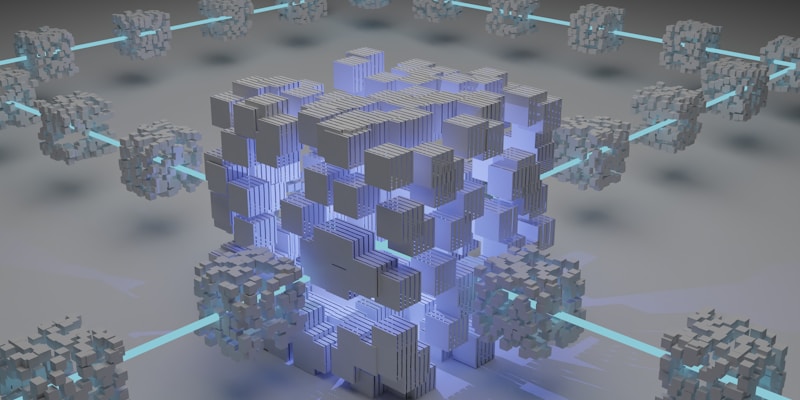
While cryptocurrency dominates blockchain headlines, the technology's true revolution is transforming traditional industries. From supply chains to healthcare, blockchain is creating transparent, secure, and efficient systems that were impossible just years ago.
Supply Chain Transformation
Walmart uses blockchain to track food from farm to shelf, reducing food contamination tracing from 7 days to 2.2 seconds. When contamination occurs, specific products are immediately identified and removed, preventing widespread recalls.
"Blockchain provides single source of truth across complex supply chains," explains logistics expert Thomas Chen. "Every participant—farmers, manufacturers, distributors, retailers—sees the same data in real-time. No more disputes about what happened when."
Maersk and IBM's TradeLens platform digitizes global shipping documentation. Previously, shipping containers required 200+ interactions and took weeks to clear customs. Blockchain reduced this to hours, saving billions in delays and fraud.
Healthcare Data Management
Medical records scattered across hospitals create dangerous gaps. Blockchain enables secure, unified health records accessible to authorized providers anywhere.
Estonia implemented nationwide blockchain health records in 2012—now considered world's most advanced system. Patients control access, doctors see complete histories, and data breaches are virtually impossible due to distributed storage.
"Blockchain solved healthcare's biggest problem: interoperability," notes Dr. Sarah Martinez. "My patient's records from New York hospital instantly available when they need emergency care in California. This saves lives."
Secure Voting Systems
West Virginia piloted blockchain voting for overseas military personnel. Each vote is cryptographically verified, preventing tampering while maintaining anonymity. Results are instantly auditable by anyone, eliminating election fraud concerns.
Sierra Leone used blockchain to verify 2018 presidential election results alongside traditional counting. The blockchain count matched exactly, proving the technology's reliability and building public trust.
Critics argue about implementation details, but blockchain addresses democracy's fundamental challenge: ensuring every vote counts exactly once while maintaining voter privacy.
Digital Identity Solutions
1.1 billion people lack official identification, excluding them from banking, healthcare, and legal systems. Blockchain-based digital identity provides verifiable credentials without centralized databases vulnerable to breaches.
Microsoft's ION network runs on Bitcoin blockchain, allowing users to create decentralized identifiers. These IDs work across services without companies storing personal data—users control their own information.
"Self-sovereign identity is human right," argues blockchain advocate David Lee. "You shouldn't need government or corporation to prove who you are. Blockchain makes this possible for first time in history."
Real Estate and Property Titles
Property fraud costs $9.6 billion annually. Blockchain-based land registries make title fraud virtually impossible. Sweden, Georgia, and Ghana are implementing systems where property ownership is recorded on immutable ledgers.
Smart contracts automate transactions—when purchase conditions are met, ownership automatically transfers. No lawyers, no title companies, no 60-day closing periods. Properties change hands in minutes instead of months.
Intellectual Property Protection
Musicians, artists, and writers use blockchain to timestamp creations, proving ownership without copyright offices. When work is used commercially, smart contracts automatically distribute royalties.
Spotify and other services lose $2.6 billion annually to incorrect royalty payments. Blockchain ensures every stream is tracked and every creator paid accurately, solving industry's chronic payment problems.
Academic Credentials
MIT issues diplomas as blockchain certificates. Graduates share tamper-proof credentials with employers who verify instantly without calling universities. Fake degrees—a $7 billion fraud industry—become obsolete.
"I've verified thousands of degrees in my career," says HR director Jennifer Kim. "Blockchain reduces this from weeks of phone calls to clicking a link. It's transformative for hiring."
Energy Grid Management
Blockchain enables peer-to-peer energy trading. Brooklyn Microgrid allows homeowners with solar panels to sell excess energy directly to neighbors, bypassing utility companies.
Smart meters record production and consumption on blockchain. Transactions settle automatically. This incentivizes renewable adoption while reducing dependence on fossil fuel infrastructure.
Corporate Adoption
67% of Fortune 500 companies have blockchain initiatives:
- IBM: Food Trust for supply chain transparency
- Visa: B2B Connect for international payments
- Amazon: Managed Blockchain service for enterprises
- JPMorgan: Onyx platform processing $1 billion daily
"Blockchain is infrastructure investment like internet in 1990s," predicts tech analyst Marcus Stevens. "Current applications are just beginning. The real revolution is 5-10 years away as developers build on this foundation."
Challenges and Limitations
Blockchain isn't perfect. Scalability remains challenging—Bitcoin processes 7 transactions/second vs. Visa's 65,000. Energy consumption, though improving, is still significant. And regulatory uncertainty creates hesitation.
However, Layer 2 solutions, proof-of-stake consensus, and clearer regulations are addressing these issues. Technology improves exponentially while problems are solvable.
Bottom Line: Blockchain's impact extends far beyond cryptocurrency. Industries adopting blockchain see fraud reduction, efficiency gains, and transparency improvements impossible with traditional databases. While challenges remain, the technology's ability to create trust without intermediaries represents fundamental shift in how society organizes information. We're witnessing early stages of revolution comparable to the internet itself.